
I was telling you in the last article about our stay in Bangkok, the mega city (article here!). The buzzing city has so much to offer, that one needs weeks, even months to unreveal its secrets. It remains an empire of grey, though, and we were craving some time in the nature. Time to pack our bags up, towards the north of Thailand. How? Taking the train, of course!
I realized that 2 weeks without somewhere green or the sea was the best we could do. Tell me you grew up in the countryside without telling me that you grew up in the countryside!
Taking the train in Thailand
Thailand is truly a tourists’ paradise.
Introducing: Thailand Train Map (extracted from Thailand Trains)! Most of the country can be explored by train, thanks to the five main lines: the Northern Line, the North Eastern Line, Kanchanaburi Line and the Southern Line.
In our month-long stay in Thailand, we have traveled from North to South, thanks to the Thailand Railway.

We have noticed it throughout our trip in Thailand: the Thai have mastered welcoming tourists. Thailand is referred to as the Land of Smiles, thanks to their friendly welcome. Many Thai speak fairly good English, which makes communicating easy. And when they do not, they have planned for a local English speaker to be on call. When we enter Bangkok old train station, we are welcomed by a train station worker, standing up as we arrive and greeting us with a helpful “Hello! Where are you going?”. It turns out that this worker is dedicated to guiding foreigners. With her help, it only takes us 5 minutes to get train tickets for the same day, from Bangkok to Phitsanulok.
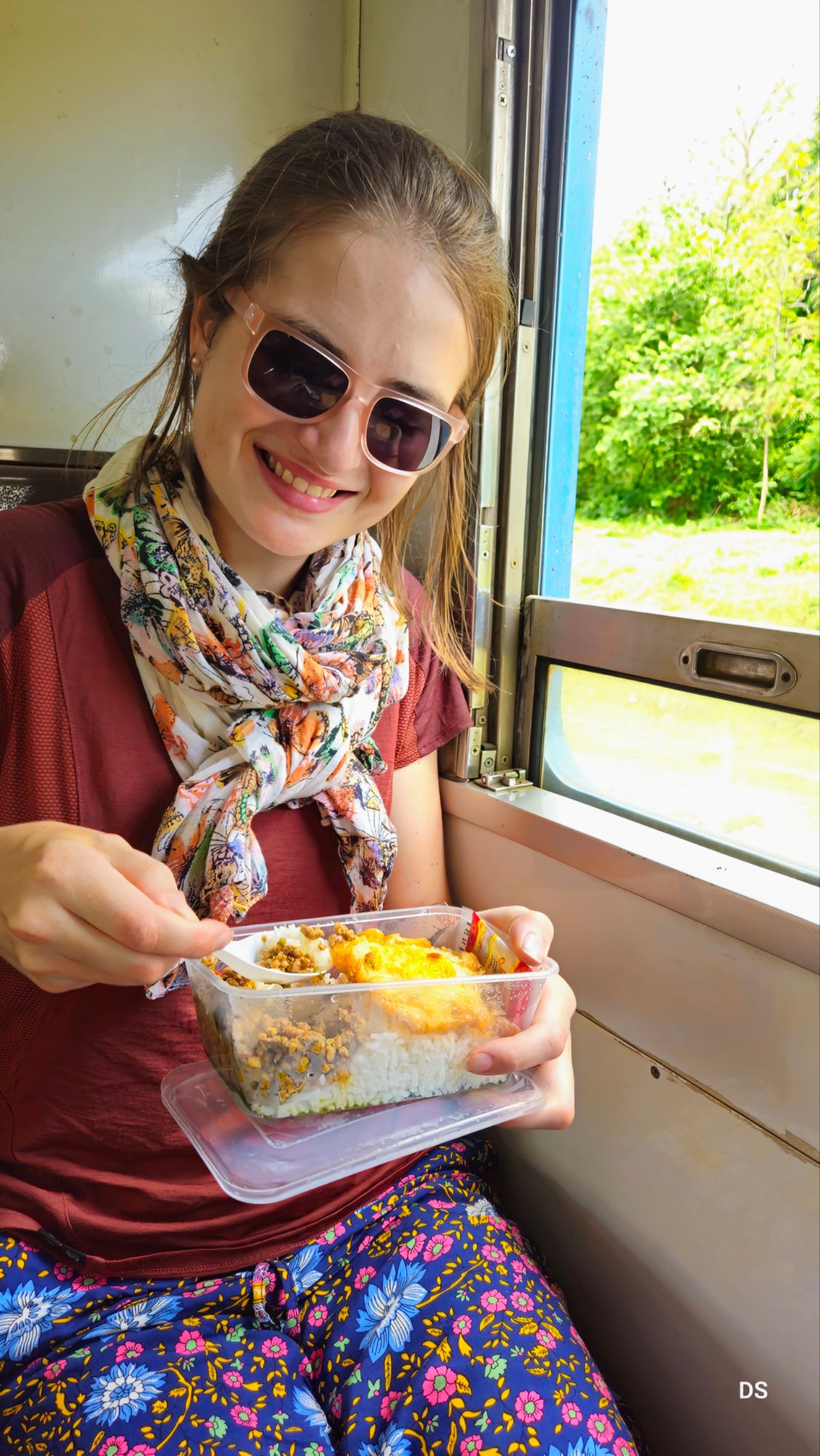
We are offered with tickets either for the new, AC-equipped, fast train, either for the slow, old-school train. This trip ends up being the cheapest and slowest train ride of our lives: 3.50 euros for two people, for 8 hours of train. Speed monitored: 50 kms/h, at its utmost. That’s alright, it is easy to keep ourselves busy: with the train windows wide open, we enjoy the beautiful landscapes that unveal themselves along the rails. Food vendors roam the train every 5 minutes, advertising everything from cold drinks to snacks, fruits and full meals. We had to try them, obviously – 10/10 for a meal costing 1 euro, delivered to you warm.
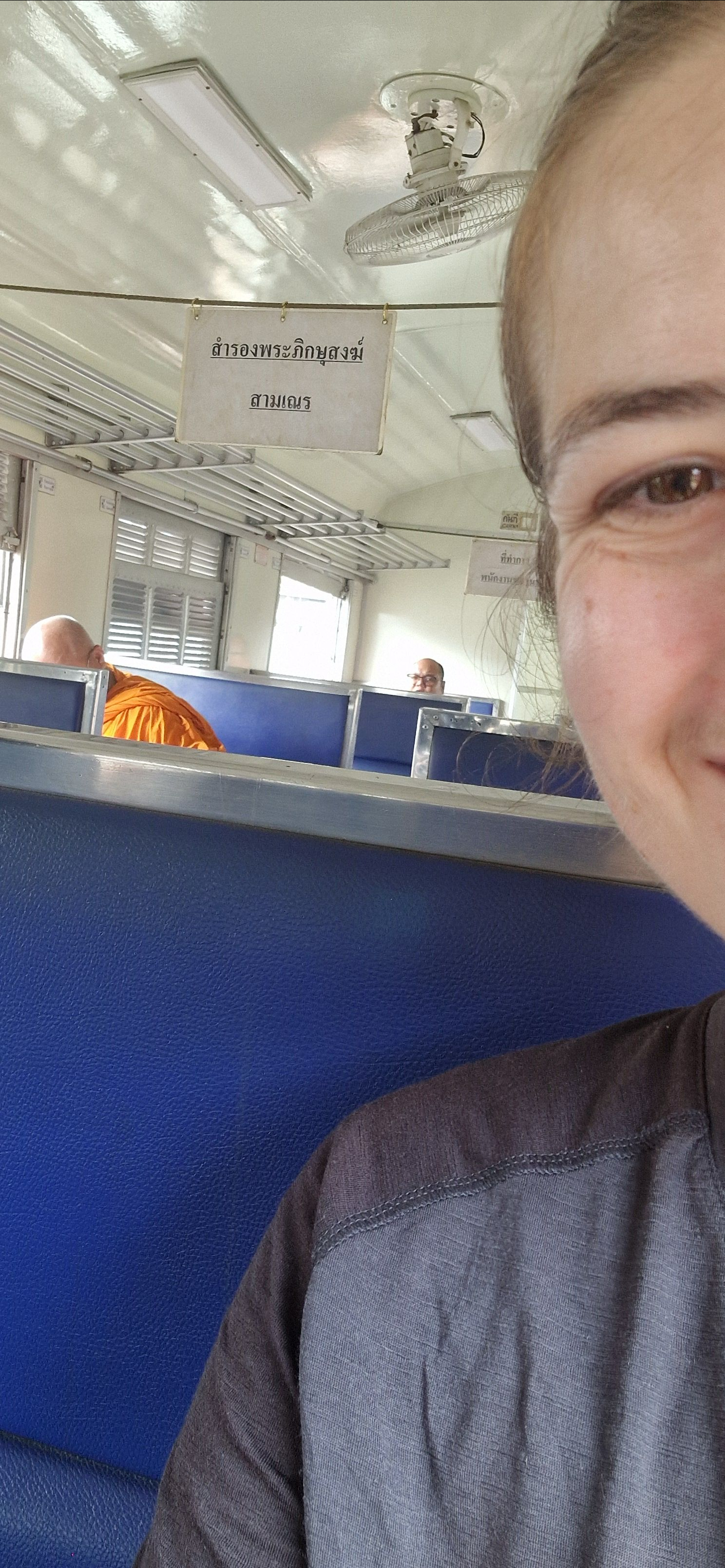
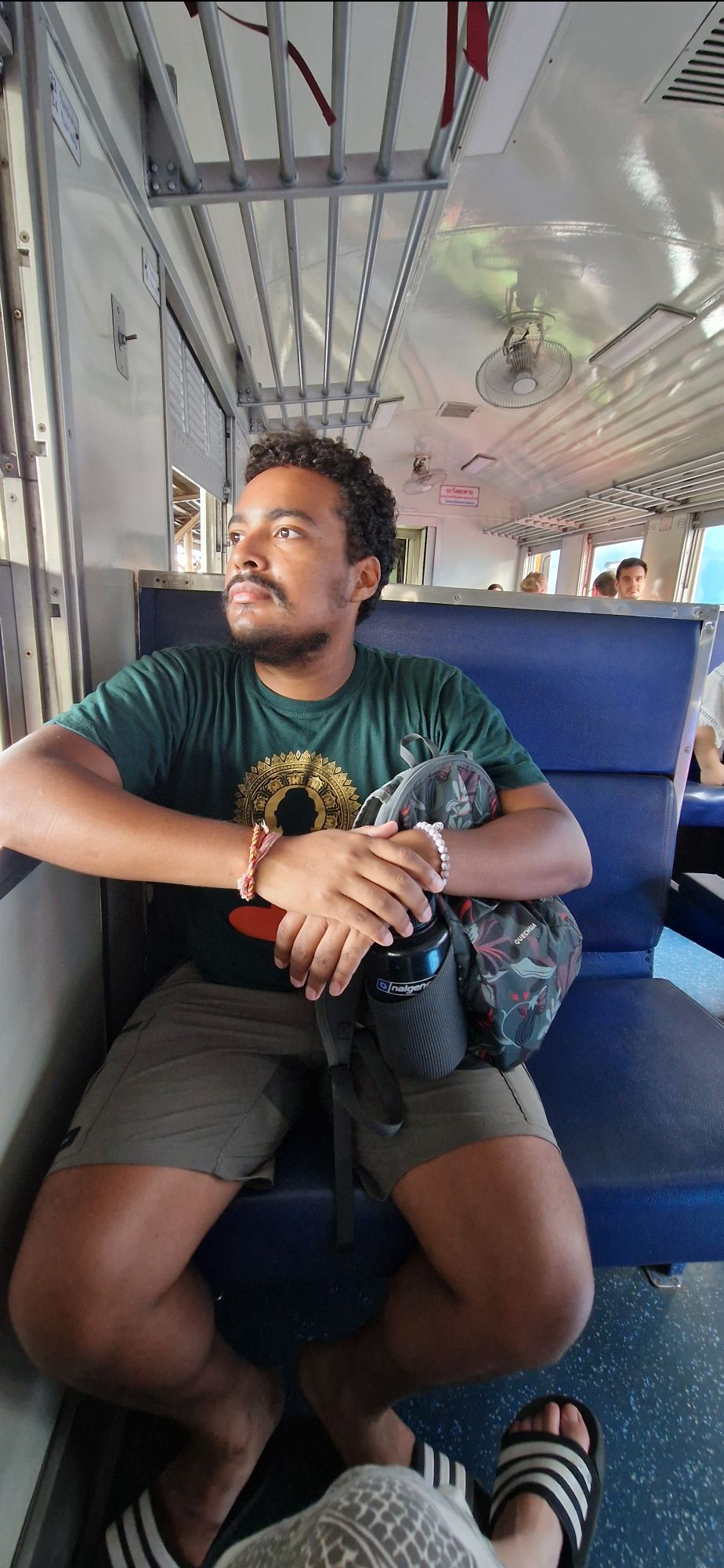
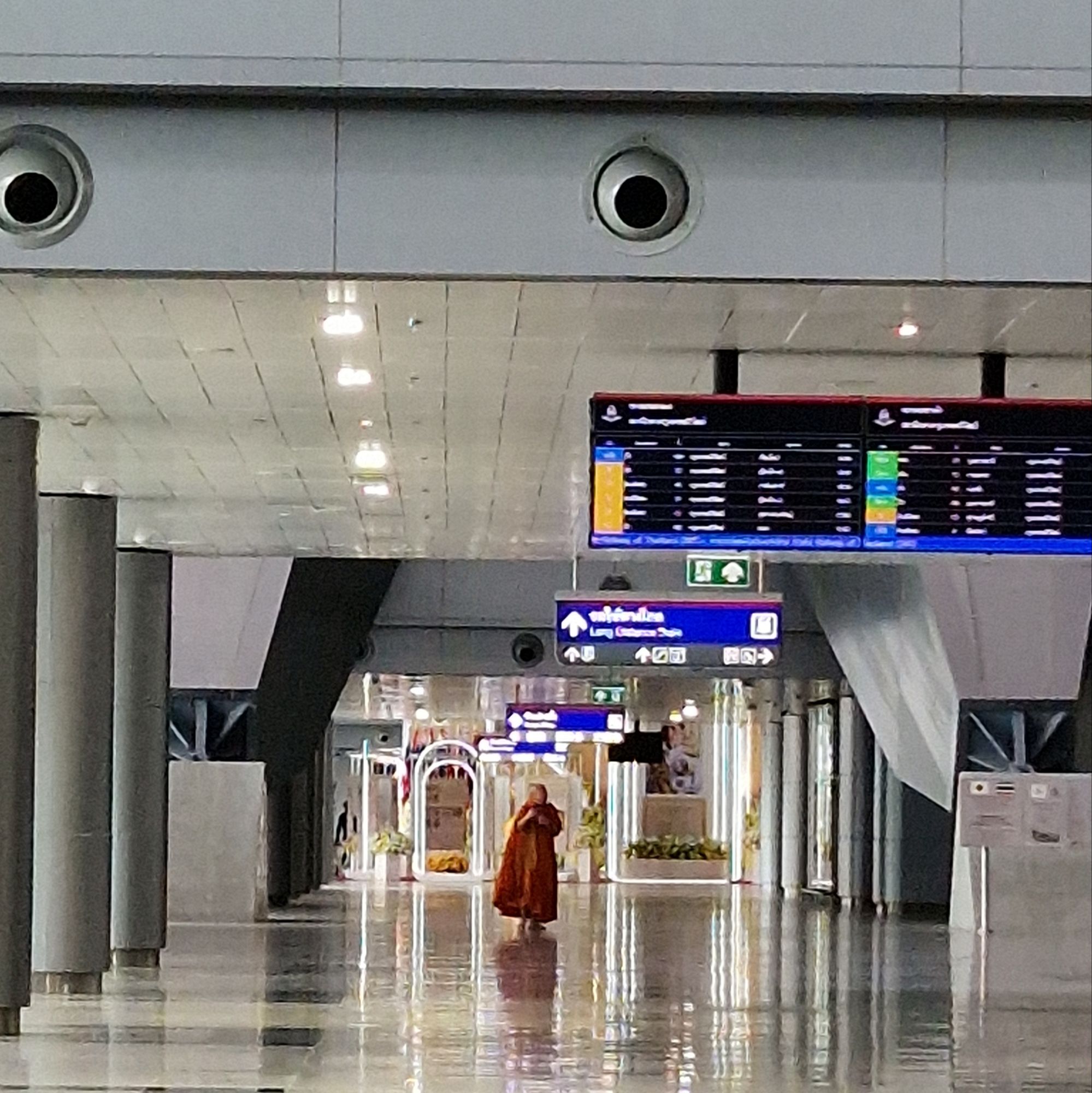
I pointed out “Bangkok old train station” (namely Hua Lamphong) earlier, as opposed to Bangkok new central station (namely Krung Thep Aphiwat Central Terminal), where all main lines now depart from. The former is old fashioned, the latter is a shinning modern space that looks like an airport. All modern trains start from Krung Thep, which is located in Bangkok’s outskirts.
From Bangkok, our first stop is Phitsanulok, chosen by Dimitri to cut our trip to Chiang Mai in half.
Phitsanulok, our love at first sight
After 8 hours of a delightful train ride, we arrive in Phitsanulok, with its 62,000 inhabitants and famous temples. We know that we have hit the jackpot when none of the tourist signs is in English: it means that the place caters most to inland tourists, ensuring an experience outside of the main crowds. Crossing the rails on foot also contributes to this “small town” feeling (who needs a footbridge when you have a plank set directly on the rails?).
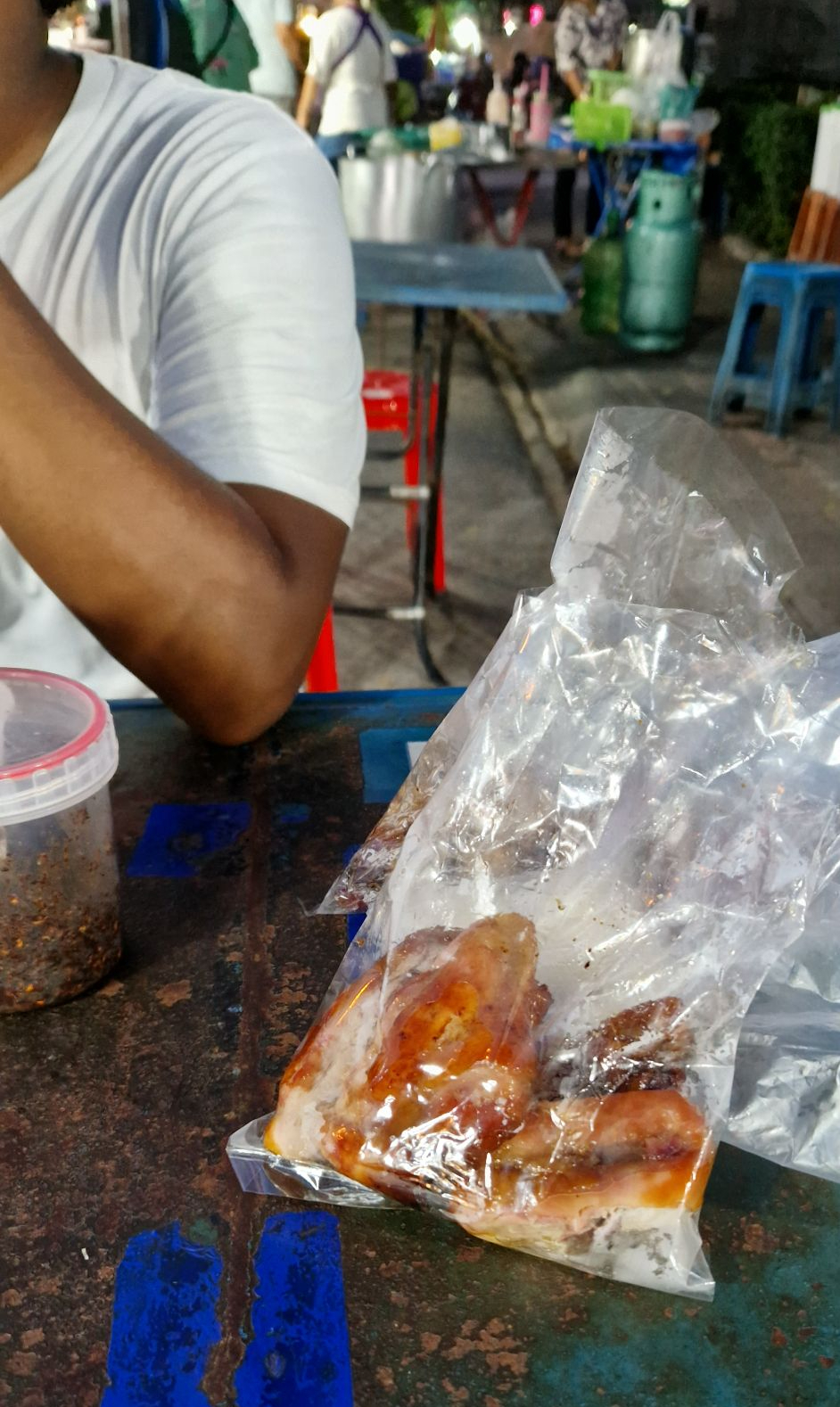
Dimitri has selected our hotel based on comments advertising a delicious food market facing the building. A.k.a. the best criterion to choose a place. For an insane low price (1.50 euro per head), here we are, gorging on fried chicken, noodle plates, with fresh cut fruits for dessert. Communication is done with hands and smiles; numbers partly in English, partly with fingers. Roasted insects are offered, but we pass for this time. We enjoy the warm nights, sitting on plastic stools, eating from plastic bags on rusty tables. Based on our experience in South-East Asia, the shabbier the sitting setting, the better the food. We are astonished later on to see that the snacks we buy at 7-Eleven cost more than a plate of fresh food from these stalls…
Life is good in Phitsanulok. We go window shopping in a pet shop, looking ahead for Dimitri’s little dog. As we have been making my dream come true these past months, it is time to plan for Dimitri’s own dream: adopting a dog. Most of the time, when I see him focused on his phone, he is looking at articles about training your dog or at cute Instagram doggo videos. Following a conversation about our phone search histories, he ends up showing me his: how to brush your dog’s teeth, what is agility?, should your dog go on the bed?, etc. Adorable.
Speaking of markets, Friday is the day of the night market. True to their talent in counterfeiting, the vendors offer Chanel and Louis Vuitton bags laying on a sheet on the pavement. We buy matching socks, to wear on the day we will travel different roads, at Kuala Lumpur end of August. I buy a “genuine” watch for 5 euros. Weeks later, I can confirm that the saying “The watch you buy in Thailand works only until you reach your home country.” is 100% true: mine stopped working as soon as I reached Malaysia. Not even a battery change relived it.
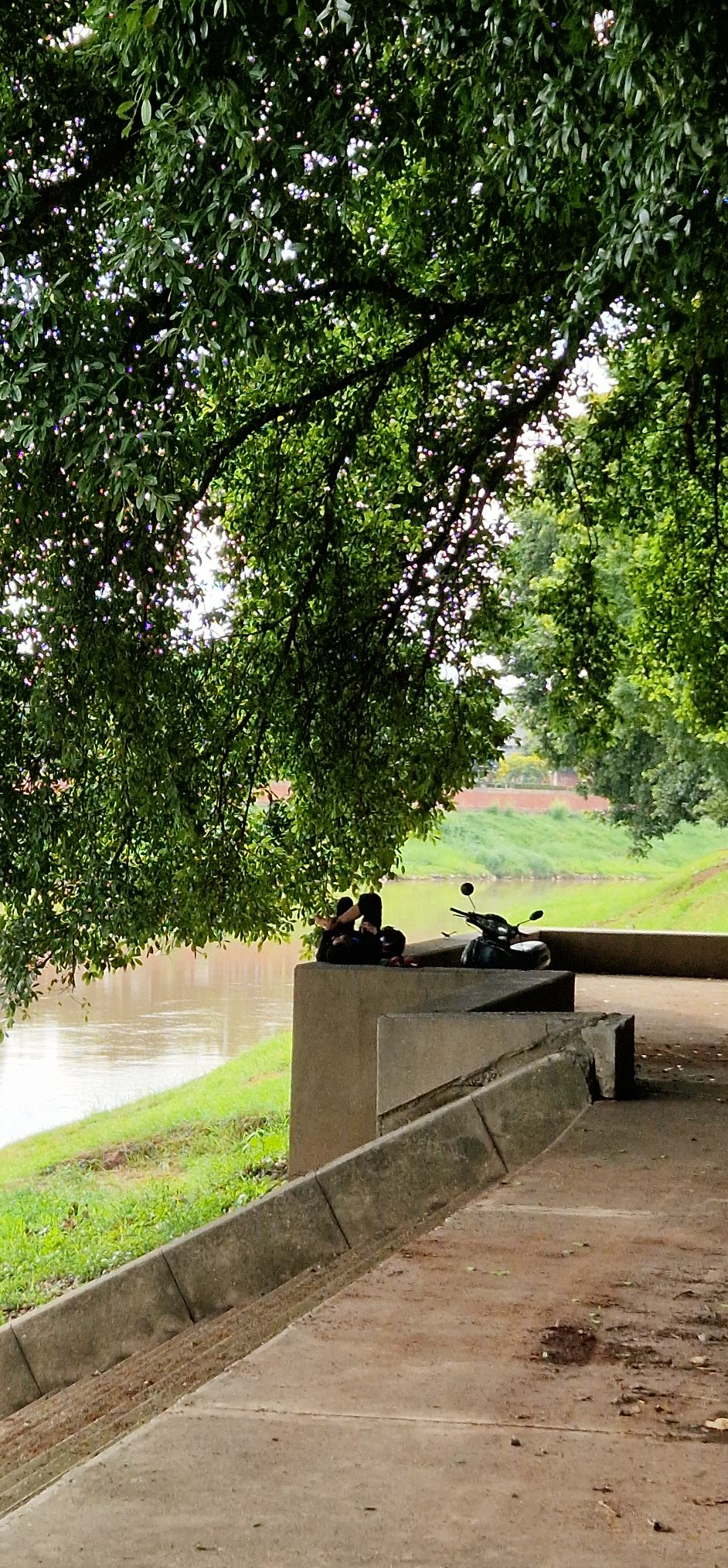
At day, we walk through the city, along the river to the temples. Children sport the cutest uniforms, chilling and laughing in packs. I wish I could talk pictures of all these uniforms, which look like boy scouts’ for some – taking pictures of children to post them online is still out of boundaries for me. We are enjoying the stroll when we hear a shrill “Hello, where are you from?”; the little girl shouts an admirative “Waaaah” when we tell her that we are French, her friends jiggling. Adorable x2.
We continue walking to Wat Sat Ket Ratchaworamahawihan (The Golden Mount) and the surrounding temples. Friday evening must be an important time of the week for the Buddhist, because we are blessed with ceremonies that evening. After struggling to find our way (entering a school yard without knowing), we stop at a temple for a little prayer when we hear music outside. A couple, accompanied by two musicians, is performing sacred dances, celebrating Buddha.
Later in the evening, we unknowingly crash into the Buddhist equivalent of a mass, where we try to blend in as much as we can. An elegant Thai lady, in her seventies, comes to us – snoop, did we do anything wrong? No no – she smiles at us, thumbs up and comments “Very good, very good!”. A guard even takes a picture of us. 10 minutes after the ceremony has begun, a group of tourists arrives, stays for a bit and leaves – I take it that ours was not that much of a rare experience! Still, we are carried away by the gold temple and orange monks singing in front of the Buddha.
Monks are a common sight in Thailand, as in Cambodia. We spot them everywhere, and it is quite funny to see them living as regular beings. Special mention to the young monk who was falling asleep during the ceremony, his neighbor waking him up several times, and the cheerful fellow who was heading to summer camp with his group of youngsters, taking group pictures at the train station.
We fell in love with Phitsanulok. You only need a day to visit the main monuments, but the city vibe is pure joy. Our goal is further North, nonetheless: to the train station!
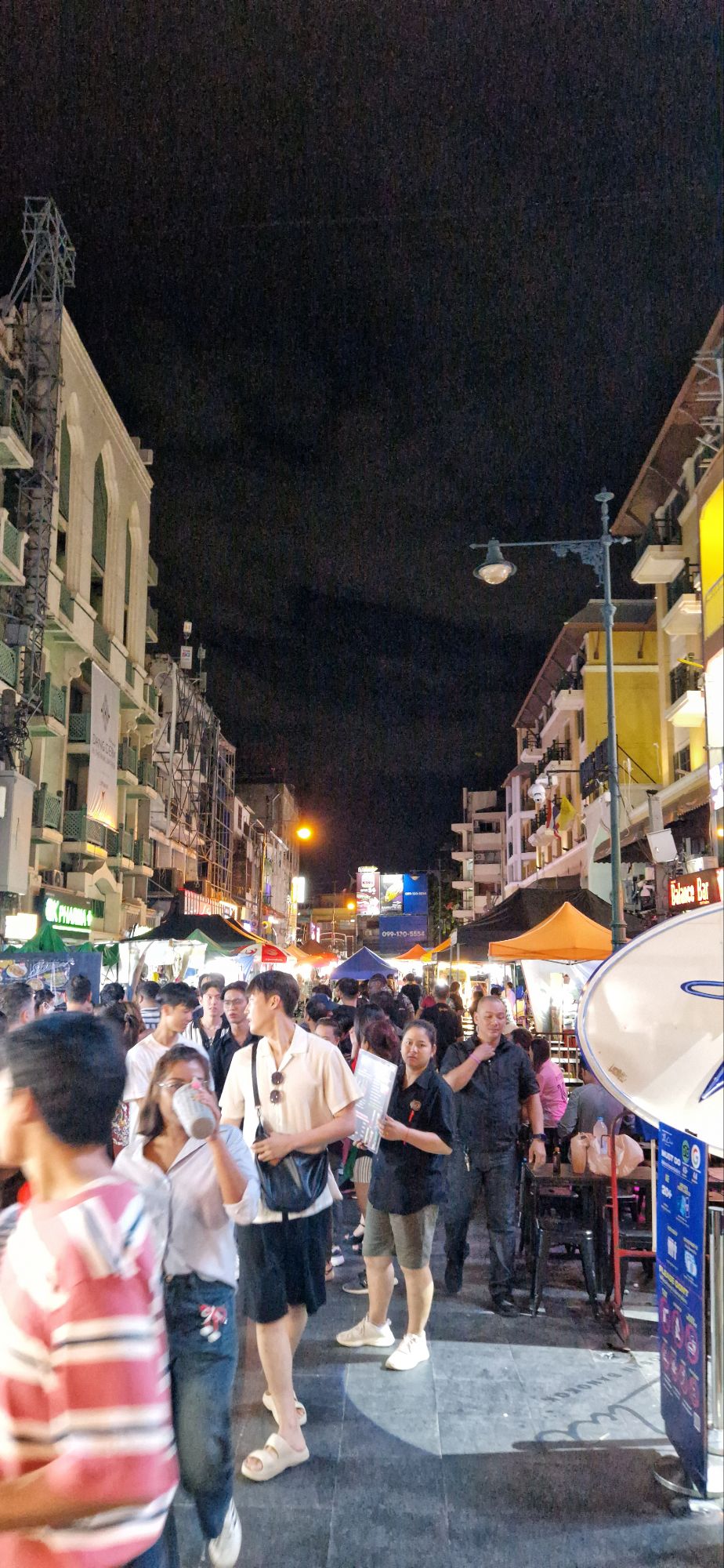
Chiang Mai, gateway to the jungle
Another slow train, this time less peaceful as we sit next to the rear-end door and the entire car vibrates from the wind. Lesson learnt for our next ride! Compared with Phitsanulok, Chiang Mai is a tourist hub, gateway to the jungle and the elephant “sanctuaries”. The train station itself showcases sculptures of the pachyderm, making it quite clear that the tourism industry bets on it to attract tourists to the north of the country. Once again, please be extra careful when faced with activities involving animals. It will be confirmed later on by the animal welfare organization that I will visit near Hua Hin: companies do not need to comply to any rule to call themselves “sanctuaries”.
As a good rule of thumb, any commercial activity that includes being in direct contact with animals is detrimental to their well-being. In any case, never ever ride an elephant. Or even bath them – they can do it on their own, and they are more often that not chained under water to endure many tourists pouring water over them. I mentioned it already in my article on the Chitwan park in Nepal (link here), but it is worth dropping the link to the enlightening article from the Broke Backpacker once again: How to Stop Abuse in the Elephant Tourism Industry
Long story short: no elephant “sanctuary” for us. Chiang Mai still has plenty to offer beside that. Dating back to the XIIIth century, the city led the independent Lanna Kingdom during three centuries. As usual, capital city is equal to gorgeous monuments, and Chiang Mai’s many temples are a treat for your eyes. To be honest, we barely plan on visiting the city when we arrive in Chiang Mai, as our idea is to go hiking in the nearby natural parks. Jumping from one architectural wonder to the another makes us change our minds, leading to adding a few days to our stay.
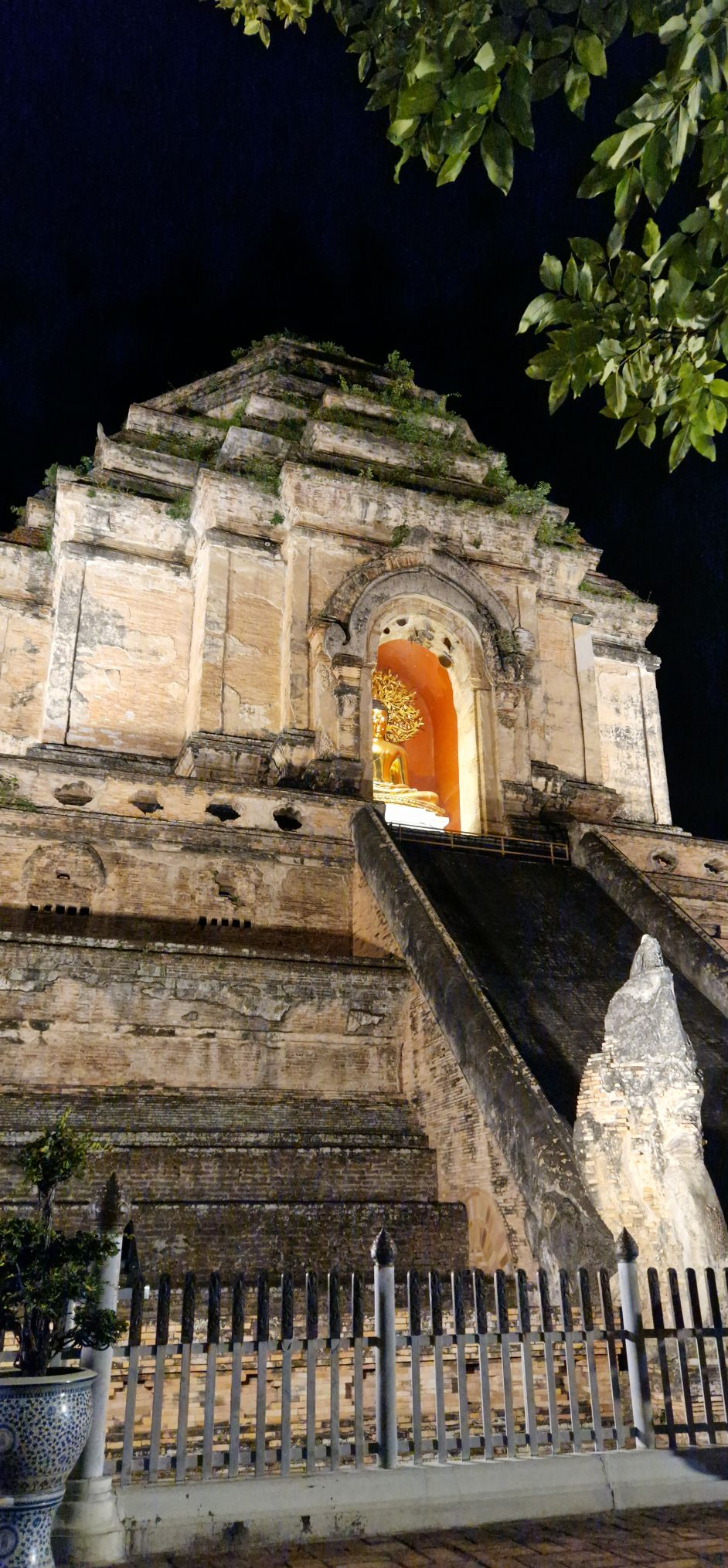
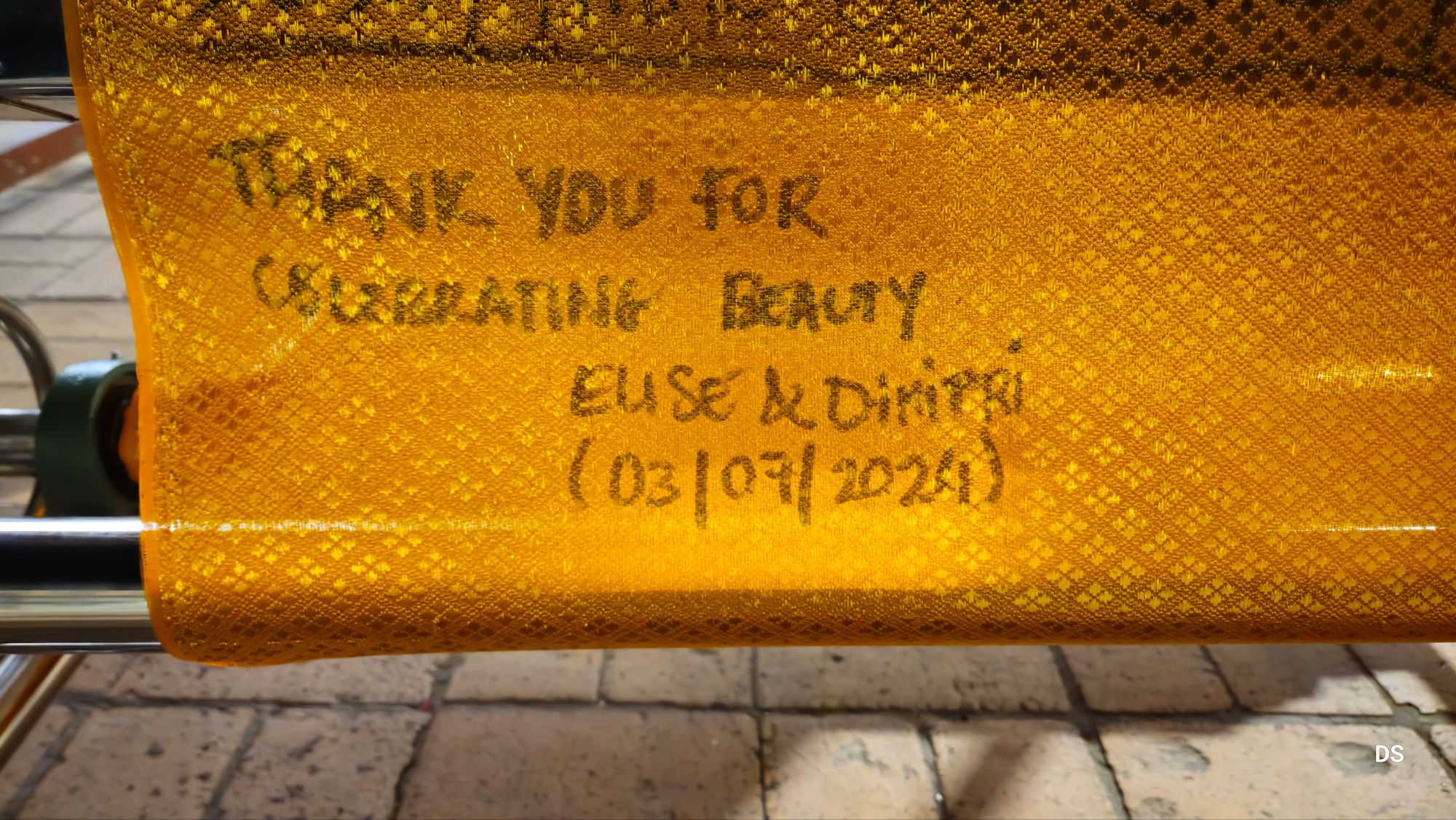
At the time when the French elections are the hot topic in France, with a day a plot twist, we find peace sitting on a bench at night in front of the Wat Chedi Luang, a XVth-century stone beauty. We face the golden Buddha, listening to the tinkling of the wind chimes. This moment of cooling down is fully worth almost being locked in, as we miss to notice that we are past the temple opening hours. We leave a little testimony behind, written on the silk ribbon used as visitors’ book. Sadly, we could not talk with the monks, as we always visit too late to be part of the “Monk Chat Program”, which is aimed at improving the monks’ English mastery. I would have loved asking them about their lives!
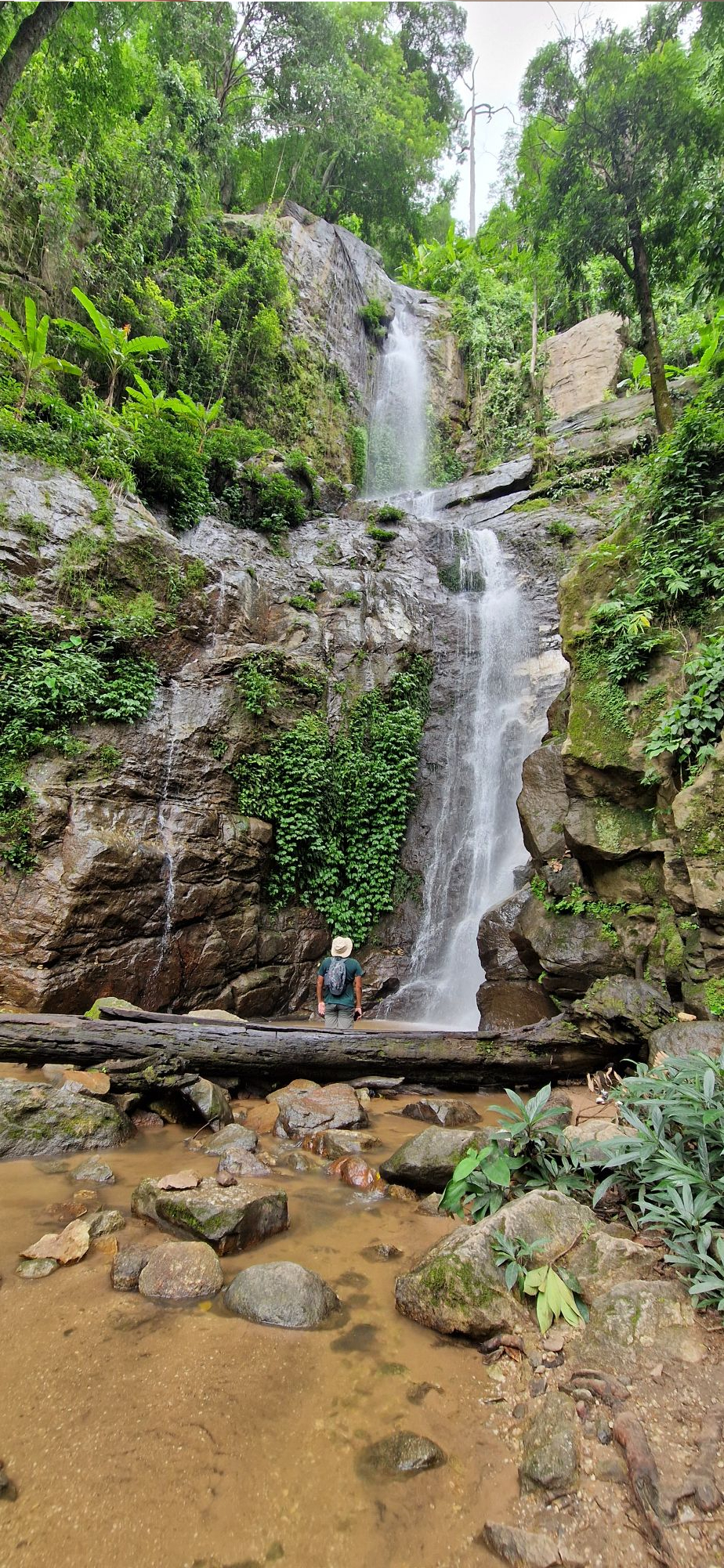
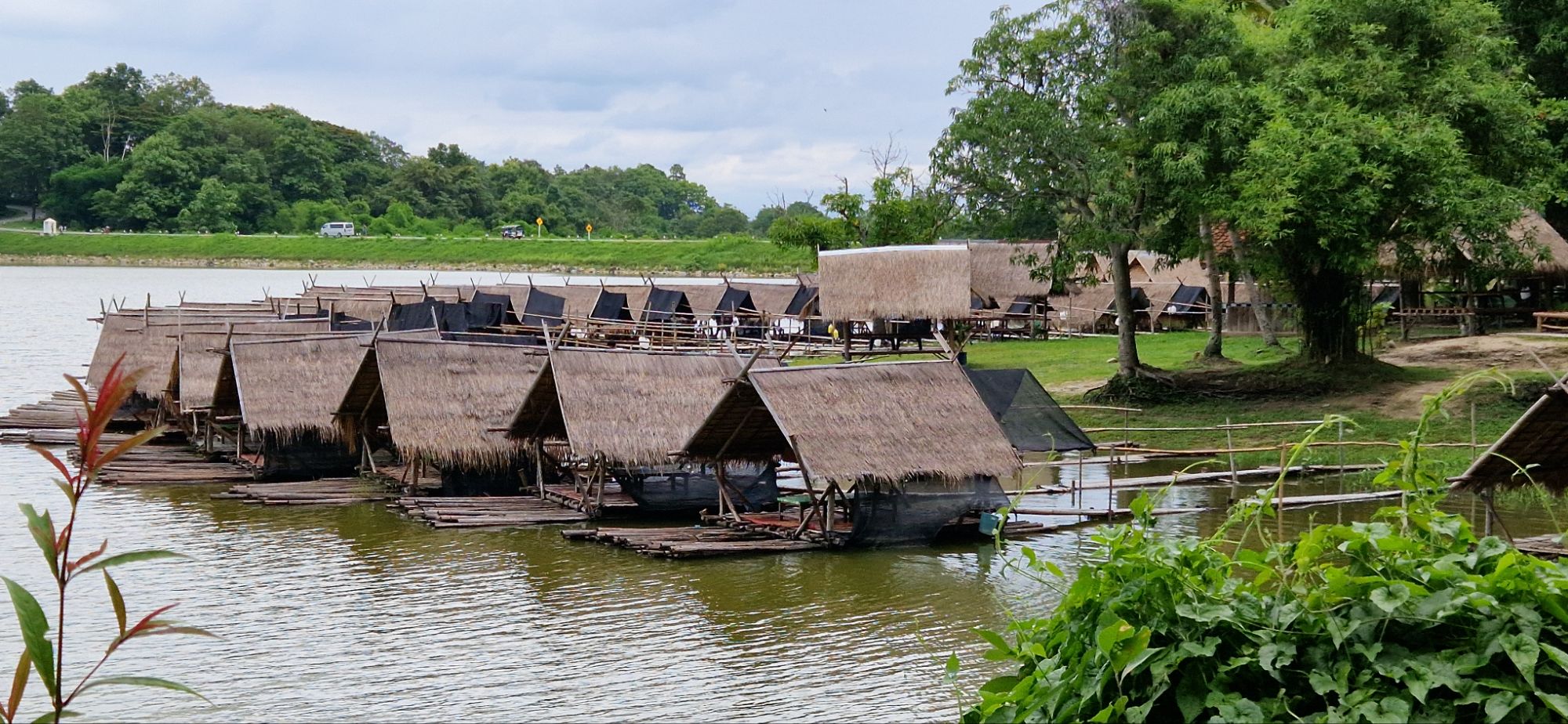
We came to Chiang Mai to hike, so let’s hike. Thanks to the app AllTrails that we discovered in Nepal, we set off to the Daat Mook Waterfall. As always with AllTrails, we find ourselves on barely maintained tracks, fighting through the bamboos and the branches… until we realize that there was an easy way to reach the waterfall – pffff, easier but less fun! If you know us, you can also picture how hiking under a leaf roof is easier for Dimitri than it is for me. The funny encounters we do on the path likely did not go the hard way, whether they are the duo of Instaboys that arrive to take several selfies right when Dimitri is skinny dipping, the woman in revealing clothes having her picture taken by two cameramen at a hidden pond (such an embarrassing moment for me) or the group of friends climbing with a guitar. We end the day drinking original Thai beers at a floating shack.
The target of the following day is Wat Pha Lat, a temple hidden in the jungle, the pilgrims proving their faith by climbing the mountain to reach it. The tuktuk that we take from the city drops us at the foot of the long road leading up to the start of the hike, so we are pleased to experience it like “back in the days”. Mid hike, a smiling guy gives us a bamboo stick – essential to walk along the slippery track. When we reach the temple, we are blown away by the peaceful setting, inviting you to relax and meditate. I do feel a bit ashamed about being sweating, when we see all the other tourists fresh as roses. On our way back, looking for another AllTrails hidden path, we get it: our “hidden” temple can be reached now by a brand modern busy road… Oopsie. Nevermind – Dimdim shows me sensitive mimosa nearby the road, a plant that closes itself up when touched, resulting in me traumatizing poor plants.
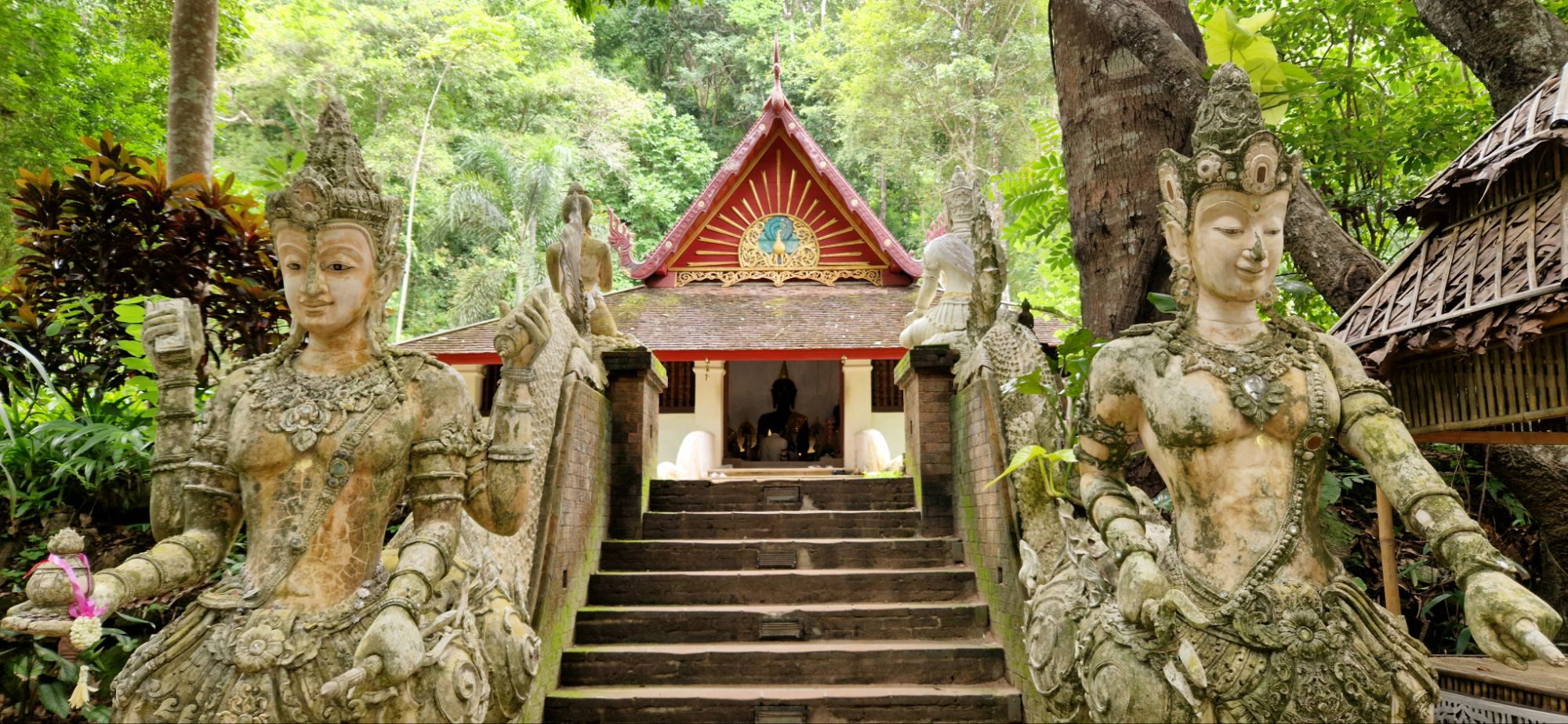
Beside hiking, we hardly plan for anything and end up doing random funny activities in Chiang Mai:
- We watch a group of ladies wearing afro wigs perform an energetic play in the street.
- We go to the tailor to have my pants turned into a pair of shorts, and we eventually leave with a tailor-made shirt for Dimitri.
- We compare the fried chicken at a local Korean restaurant, McDonald’s and KFC. End score: the local Korean restaurant wins for me, while Dimitri stays faithful to his forever love, KFC.
- We chill by our hotel pool (a rare feature, at least in our price range), resting from all the travel.
- We discover more and more crazy sculptures on the temples, including some slightly disturbing ones (see evidence below).
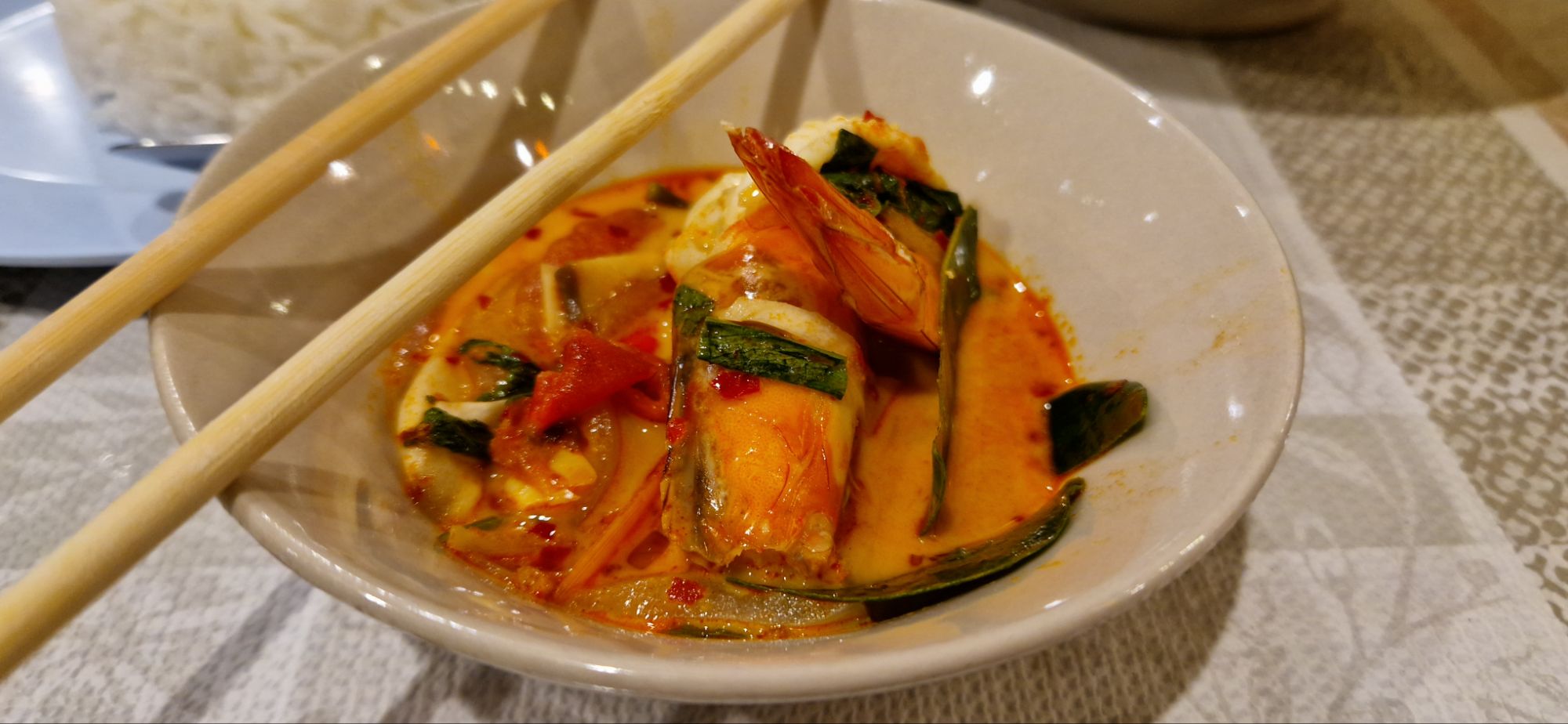
- We keep on exploring Thai cuisine, enjoying every Padthai (the famous all-in noodle dish), Pad See Ew (another delicious noodle dish), Tom Yum (bright red shrimp curry) and Massaman curry (a soft curry with potatoes). My low tolerance to spices prevents me unfortunately from trying out two-thirds of the Thai dishes – the remaining safe third is delicious, so that’s fine by me!
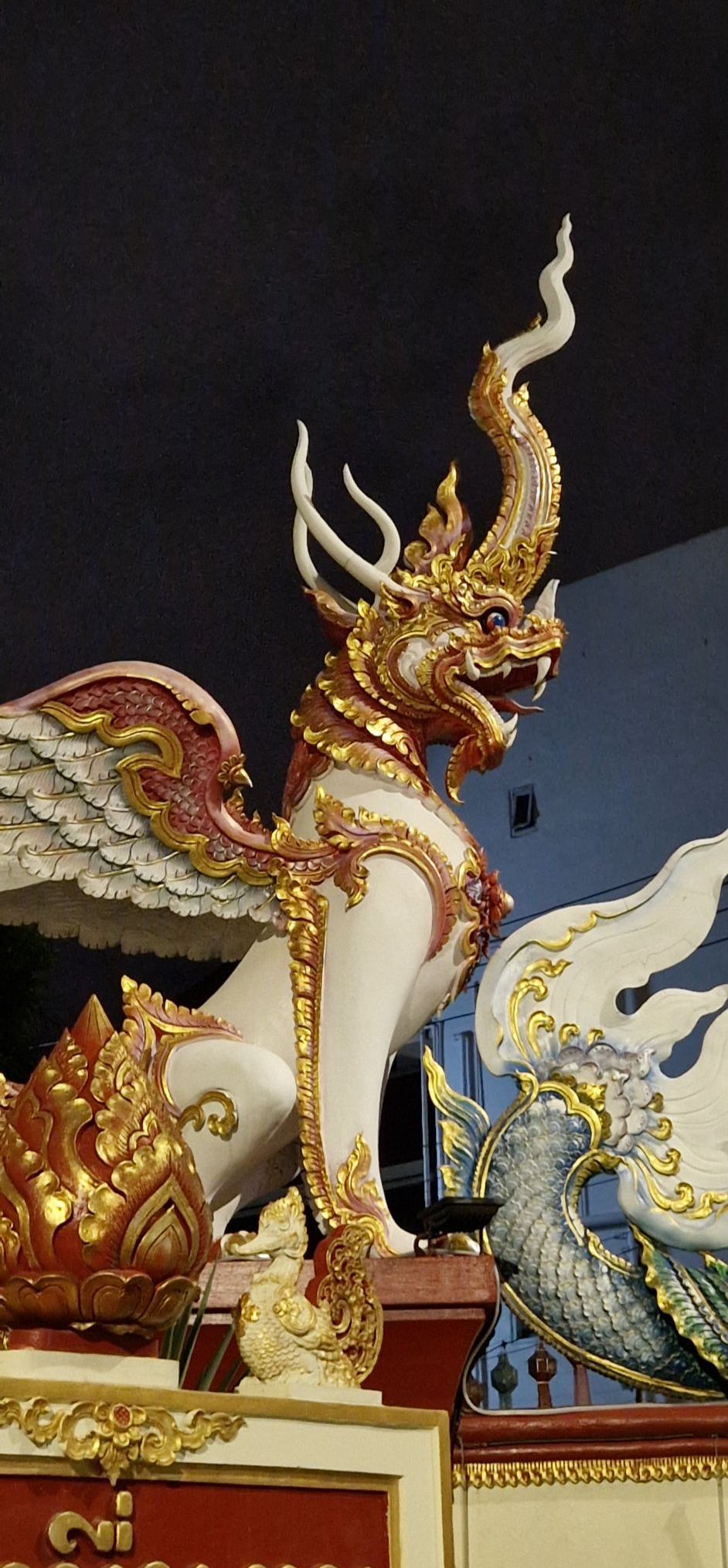
As it was the case for Phitsanulok, we wish we could have stayed more in Chiang Mai. We still have a long way to go, and we leave after a bit more than a great week in the North of Thailand.
After one stop in Bangkok, we continued our path towards the South of Thailand, in order to cross the border with Malaysia end of July. I will tell you all about the rest of the amazing time we had in Thailand in my next article, which will conclude the Thailand series.
See you soon! 😘

 Breathe In The World
Let us know what you think! PS: don’t forget to sign it ;-)